

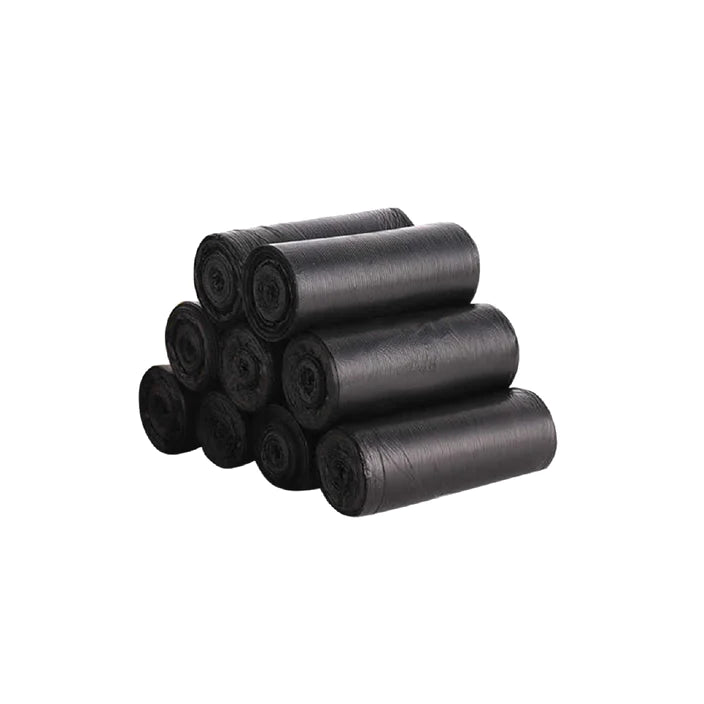
Trash Bag
- Regular price
- $0.00
- Regular price
-
- Sale price
- $0.00 Sale
- Unit price
- /per
- Availability
- Sold out
Adding product to your cart
Dimensions/Sizes:
- 24” x 32”
- 32” x 39”
- 36” x 48” (120L)
- 39” x 47”
- 50” x 52” (240L)
*Image for illustrative purposes only
*Due to the many variations in monitors and browsers, color samples may appear different on different monitors
-----
Complete Guide to Commercial and Household Trash Bags
Maintaining a clean, hygienic, and well-organized environment relies heavily on effective waste containment. Placing refuse directly into unlined bins creates unsanitary conditions, causes foul odors, leads to liquid leaks, and requires frequent, labor-intensive bin cleaning.
Trash Bags (waste bin liners) provide an essential, hygienic barrier that secures general household, commercial, and institutional refuse. Available in various sizes and gauge thicknesses, these durable plastic liners line waste receptacles perfectly, protect bin interiors, prevent liquid leachate spills, and streamline the waste collection and removal process.
This comprehensive guide covers everything you need to know about Trash Bags—including material properties, sector-specific applications, usage protocols, and preventative care tips.
What Are Trash Bags?
Trash Bags are flexible, high-tensile plastic liners engineered to line domestic, commercial, and industrial waste receptacles.
Rather than serving as simple disposable sacks, quality trash bags function as an active sanitary management tool that fulfills several core operational roles:
-
Sanitary Barrier Protection: Prevents raw garbage, food scraps, and dry waste from touching the inner walls of waste containers, reducing bacterial growth and unpleasant smells.
-
Leachate & Leak Containment: Retains moisture and liquids from organic food scraps, wet paper, and discarded beverages, preventing messy floor spills during transport to bulk dumpsters.
-
Streamlined Refuse Removal: Allows custodial staff and homeowners to tie off, lift, and remove full loads of rubbish in one quick, effortless motion.
-
Odors & Pest Control: Keeps waste sealed within the bag structure, deterring fruit flies, rodents, and other common pests from infesting indoor disposal zones.
Key Features & Specifications
Selecting the right waste liner requires matching the bag size and film strength to the specific container capacity and waste stream type.
Product Specifications
| Specification | Details |
|---|---|
| Product Name | Trash Bags / Waste Bin Liners |
| Product Type | Disposable Waste Container Liners |
| Material | High-Density Polyethylene (HDPE) or Low-Density Polyethylene (LDPE) |
| Size Options | Multiple sizes ranging from small pedal bins to bulk wheelie bins |
| Color Options | Black, Clear, White, or standard color-coded variants |
| Application | Household and Commercial General Waste Disposal |
Performance Advantages
-
High-Tensile Polyethylene Film: Engineered to resist punctures, tears, and seam splits even when loaded with heavy or irregular trash items.
-
Leak-Proof Bottom Seals: Features reinforced star or flat bottom seals that distribute weight evenly across the base of the bag, eliminating leaks at stress points.
-
Versatile Sizing Options: Available in a wide spectrum of capacities—from small 10L bathroom pedal bin bags to large 240L commercial wheelie bin liners.
-
Flexible Rim Stretch: Conforms easily over the upper rim of plastic, stainless steel, or mesh waste baskets to hold the liner securely in place without slipping inward.
Direct Bin Disposal vs. Using Quality Trash Bags
Disposing of refuse directly into waste receptacles introduces significant hygiene risks, higher labor costs, and unsanitary working conditions.
| Metric / Operational Factor | Direct Disposal (No Liner) | Disposal Using Quality Trash Bags |
|---|---|---|
| Bin Hygiene & Cleanliness | Waste sticks to walls; requires frequent, heavy washing | Keeps bin interiors spotless, dry, and odor-free |
| Liquid & Spill Control | Liquids pool at the bottom of the bin, causing leaks | Seals liquids securely inside the bag |
| Waste Removal Speed | Slow; requires tipping, scraping, and washing bins | Fast; simply lift, tie off, and replace |
| Odor & Pest Control | High risk of rotten odors, maggots, and fruit flies | Traps smells and deters insects and pests |
| Labor & Maintenance Cost | High labor hours spent scrubbing and sanitizing bins | Lowers maintenance time and cleaning chemical costs |
Sector-By-Sector Application Guide
Trash Bags are indispensable across virtually every residential, commercial, and institutional environment:
1. Residential & Household Settings
-
Kitchens & Food Prep Bays: Lines main pedal bins and under-sink pull-out units to capture organic food waste, packaging, and household rubbish.
-
Bathrooms & Bedrooms: Uses small, discreet white or clear liners for vanity and pedal bins to maintain personal hygiene.
2. Corporate Offices & Commercial Buildings
-
Under-Desk & Workstation Bins: Utilizes clear or lightweight liners in open desk baskets for paper, packaging, and non-organic dry waste.
-
Pantry & Breakroom Receptacles: Deploys heavy-duty black liners in high-capacity central bins to manage food containers, coffee grounds, and lunch waste.
3. Restaurants, Hotels & Hospitality Outlets
-
Kitchen & Food Service Stations: Requires thick, puncture-resistant LDPE liners to handle sharp food packaging, bones, liquid scraps, and heavy kitchen refuse without bursting.
-
Guest Rooms & Housekeeping Carts: Outfits room bins and janitorial housekeeping carts for fast daily linen and trash collection.
4. Healthcare Facilities, Schools & Public Buildings
-
Administrative & Non-Clinical Areas: Supplies classrooms, hallways, public foyers, and staff rooms with durable general waste liners.
Step-by-Step Usage & Replacement Protocol
Proper liner installation ensures the bag stays upright, maximizes usable volume, and prevents mess during disposal.
Step 1: Select the Correct Bag Size
-
Ensure the liner volume matches or slightly exceeds the gallon/liter capacity of your waste bin.
-
Rule of Thumb: The liner should overhang the top rim of the bin by 7 to 10 cm to prevent it from sliding down under weight.
Step 2: Proper Installation
-
Open the folded trash bag and shake it gently to expand its internal volume.
-
Push the bottom of the bag all the way down to the base of the bin.
-
Fold the top edge smoothly over the outer rim of the bin.
Step 3: Removal and Disposal
-
When the bag is approximately 75–80% full, pull the top overhang loose from the bin rim.
-
Gather the open top together, squeeze out excess air carefully, and tie a secure knot (or pull the drawstring handles if applicable).
-
Lift the bag straight up out of the bin and transport it to your facility's main waste collection area or outdoor compactor dumpster.
-
Replace immediately with a fresh liner.
Preventative Care & Best Practices
Following basic disposal practices prevents bag ruptures and preserves indoor air quality.
-
Avoid Overfilling: Never fill trash bags beyond 80% capacity. Overfilled bags put excessive stress on top seams, make knotting difficult, and frequently tear during removal.
-
Drain Excess Liquids: Pour out leftover drinks, soups, or ice in a sink before tossing containers into the bag to prevent unnecessary liquid weight and sloshing.
-
Wrap Sharp Objects: Wrap broken glass, sharp tin cans, or wooden skewers in old newspaper or paper towels before placing them into standard liners to prevent punctures.
-
Store in Cool, Dry Areas: Store unused rolls of trash bags away from direct sunlight, extreme heat, and moisture to prevent the plastic material from becoming brittle or degrading over time.
Troubleshooting Common Issues
Use this guide to quickly diagnose and resolve common waste liner performance issues.
Issue 1: Bag Slides Down Inside the Bin
-
Likely Cause: The bag size selected is too small for the bin perimeter, or the overhang is too short.
-
Solution: Upgrade to a larger liner size that offers at least a 7–10 cm overhang, or use a rubber bin band/clip to secure the folded edge over the rim.
-
Issue 2: Bag Tears or Splits at the Bottom Seam
-
Likely Cause: The bag gauge (thickness) is too thin for the weight or type of waste being loaded, or sharp objects pierced the seam.
-
Solution: Switch to a heavy-duty LDPE bag with a reinforced star seal for heavy or sharp waste streams.
-
Frequently Asked Questions (FAQs)
Q1: What is the main purpose of using Trash Bags?
Trash Bags line waste containers to keep bin interiors clean, contain liquid leaks, prevent foul odors, and make disposing of collected waste fast, hygienic, and convenient.
Q2: How do I choose between High-Density (HDPE) and Low-Density (LDPE) trash bags?
-
High-Density (HDPE): Thinner, highly tear-resistant material ideal for light, non-sharp waste (e.g., paper, tissues, soft packaging in office or bathroom settings).
-
Low-Density (LDPE): Thicker, highly puncture-resistant material designed for heavy, wet, or sharp waste (e.g., kitchen food waste, glass, metal cans, heavy commercial refuse).
Q3: Are Trash Bags suitable for both home and commercial use?
Yes. They are manufactured in various sizes and strengths to fit everything from small household bathroom pedal bins to heavy-duty commercial kitchen and outdoor wheelie bins.
Q4: Why are star-bottom seals better than flat seams?
A star-bottom seal gathers the bag material into a central point beneath the liner, eliminating side-edge seams, distributing weight evenly across the entire base, and drastically reducing leak risks.
Q5: How often should trash bags be replaced?
Replace the trash bag whenever it reaches 75–80% full, or sooner if organic food waste is present to maintain indoor freshness and prevent odors.