

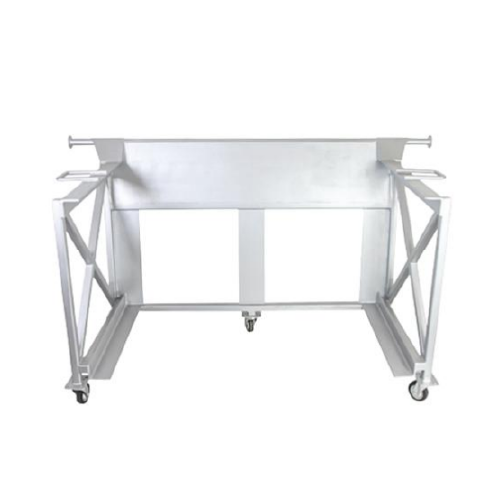
Dimension: L1580 x W840 x H1080mm
*Image for illustrative purposes only
*Due to the many variations in monitors and browsers, color samples may appear different on different monitors
-----
Complete Guide to the AUSKO EF Frame
Managing waste collection, janitorial equipment, and facility maintenance tools across large commercial and industrial properties requires equipment designed for mobility, structural strength, and high-capacity transport. Carrying gear manually or making multiple individual trips slows down operations, increases physical fatigue, and creates messy, disorganized work zones.
The AUSKO EF Frame is a heavy-duty mobile transport frame engineered to streamline waste collection and facility management workflows. Measuring L1580 × W840 × H1080 mm, this industrial steel frame provides a stable, high-capacity mobile platform that enables cleaning teams, facility managers, and municipal staff to transport waste collection containers, bins, and maintenance tools efficiently across indoor corridors and outdoor facility grounds.
This comprehensive guide covers everything you need to know about the AUSKO EF Frame—including its structural specifications, ergonomic benefits, sector-specific applications, operating procedures, and preventative maintenance protocols.
What Is the AUSKO EF Frame?
The AUSKO EF Frame is a heavy-duty, open-architecture steel mobile cart designed to consolidate, organize, and transport large-scale waste management and facility cleaning equipment.
Rather than serving as a basic utility cart, the EF Frame functions as a mobile logistics workstation that fulfills several key operational roles:
-
Consolidated Equipment Transport: Houses multiple waste bins, tools, and janitorial supplies on a single mobile platform, eliminating repeated trips back to central supply bays.
-
Ergonomic Strain Reduction: Replaces physical carrying, pushing, and dragging of individual heavy containers with a smooth-rolling wheel chassis that minimizes worker fatigue.
-
Open-Architecture Versatility: Features an accessible frame design that allows operators to load, unload, and organize equipment quickly from any angle without obstruction.
-
Indoor and Outdoor All-Terrain Transport: Moves smoothly across polished indoor floors, concrete warehouse bays, loading docks, and asphalt outdoor pathways.
Key Features & Product Specifications
Facility management productivity relies on structural rigidity, spacious platform dimensions, and heavy-duty mobilty components.
Product Specifications
-
Product Name: AUSKO EF Frame
-
Product Type: Heavy-Duty Mobile Waste Management Frame
-
Dimensions: L1580 mm × W840 mm × H1080 mm
-
Frame Construction: Heavy-Duty Industrial Steel
-
Mobility System: Smooth-Rolling Heavy-Duty Wheels
-
Primary Application: Waste Collection, Facilities Management, and Cleaning Operations
-
Suitable Environments: Commercial, Industrial, Institutional, and Municipal Facilities
Performance Advantages
-
High-Strength Steel Construction: Engineered from structural steel tubing to withstand heavy static loads, physical impacts, and continuous daily commercial use without twisting or warping.
-
Generous Working Platform (L1580 × W840 mm): Offers an expansive footprint to accommodate large commercial bins, waste containers, and cleaning supply modules simultaneously.
-
Ergonomic Height Profile (1080 mm): Positioned at an ideal working height to allow comfortable pushing and pulling without stooping or straining the lower back.
-
Open-Frame Loading Access: Eliminates high side barriers, enabling staff to lift heavy bins directly onto or off the frame platform without awkward overhead lifting.
-
Smooth-Rolling Wheels: Industrial-grade wheel casters reduce initial breakaway pushing force and dampen floor chatter when traversing expansion joints, tile seams, and doorway tracks.
Manual Transport vs. Using the AUSKO EF Frame
Relying on manual equipment handling creates labor inefficiencies, physical strain, and disorganized maintenance operations.
-
Transport Efficiency: Manual handling requires multiple round trips for individual items. The EF Frame consolidates waste containers and gear into a single efficient trip.
-
Physical Strain & Fatigue: Manual transport places high physical strain on workers' back, shoulders, and arms. The EF Frame uses smooth wheel rolling to minimize operator effort.
-
Workflow Organization: Manual methods result in cluttered, temporary storage of bins and tools. The EF Frame maintains an organized, mobile cleaning workstation.
-
Labor Hours Required: Manual handling demands higher labor hours per shift. The EF Frame lowers overall completion times for routine waste and cleaning runs.
-
Workplace Safety: Manual handling carries a higher risk of repetitive strain injuries and dropped gear. The EF Frame promotes ergonomic material handling practices.
Sector-By-Sector Application Guide
The versatility and high load capacity of the AUSKO EF Frame make it an indispensable asset across various industries:
1. Shopping Malls & Retail Complexes
-
Concourse & Food Court Refuse Collection: Allows night cleaning crews to transport multiple waste containers and sanitation supplies through retail corridors in one smooth run.
-
Receiving Bay Operations: Consolidates public recycling and general waste bins for transport down to main basement compaction bays.
2. Corporate Offices & Commercial Towers
-
Facility Housekeeping: Enables janitorial staff to move heavy paper recycling containers, general trash bins, and cleaning supply modules across large office floor plates.
3. Hospitals & Healthcare Facilities
-
Non-Clinical & Service Waste Transport: Moves bulk utility bins, laundry hampers, and maintenance gear through long hospital corridors smoothly and quietly.
4. Factories, Warehouses & Logistics Hubs
-
Assembly Line Scrap Collection: Collects manufacturing scraps, plastic wrap, and packaging waste from multiple assembly stations along factory floors.
-
Loading Dock Maintenance: Keeps receiving docks clear by batch-transporting waste containers to outdoor compactors.
5. Educational Institutions & University Campuses
-
Campus Grounds Keeping: Assists groundskeeping crews in transporting cleaning gear and waste containers across academic quadrangles and sports facilities.
6. Residential Estates & Municipal Facilities
-
Estate Maintenance: Supports residential property workers managing waste collection, bin maintenance, and grounds cleaning across housing estates.
Step-by-Step Operating Protocol
Proper loading and handling ensure maximum stability, operator safety, and smooth transport during daily operations.
Step 1: Pre-Operational Inspection
-
Inspect the steel frame for structural integrity, checking welds and frame connections.
-
Verify that all wheel casters rotate freely and are clear of wrapped string, hair, or plastic strapping.
Step 2: Position on a Level Surface
-
Park the frame on a flat, level surface before loading to prevent un-braked rolling during equipment placement.
Step 3: Load Equipment Evenly
-
Place heavy waste bins and containers onto the platform first.
-
Weight Balance Rule: Distribute the load evenly across the L1580 × W840 mm platform to keep the center of gravity centered between the wheels.
-
Ensure all items rest securely within the frame boundaries before moving.
Step 4: Transport Safely
-
Push the frame using both hands on the handle structure, keeping a clear line of sight ahead.
-
Maintain a steady, controlled walking pace. Slow down when making sharp turns, navigating narrow corridors, or crossing door thresholds and ramp slopes.
Step 5: Unload Equipment
-
Bring the frame to a complete stop on level ground before unloading.
-
Lift bins and equipment straight off the open frame to maintain proper lifting posture.
Preventative Maintenance & Care Protocol
Routine maintenance extends wheel caster lifespan, protects the steel finish, and keeps the frame operating smoothly.
Weekly Maintenance Routine
-
Clear Wheel Axles: Remove wrapped hair, string, plastic film, and debris from wheel hubs using a utility knife or pliers to keep casters spinning freely.
-
Wipe Down Frame: Clean off dirt, food splatters, or chemical residues using a damp cloth and mild multi-surface cleaner.
Monthly Maintenance Checks
-
Inspect Steel Finish: Check for scratches or bare steel exposure. Apply rust-inhibiting touch-up paint to exposed metal to prevent corrosion, especially if used outdoors or in wet bays.
-
Lubricate Wheel Swivels: Apply a light spray of lithium grease or penetrating oil to the caster swivel bearings to ensure effortless steering.
-
Check Fasteners: Inspect wheel mounting bolts and frame hardware to confirm all nuts remain tight.
Troubleshooting Common Issues
Use this guide to quickly diagnose and resolve common EF Frame performance issues.
Issue 1: The Frame Is Hard to Push or Steer
-
Likely Cause: String, plastic strapping, or hair is wrapped tightly around wheel axles.
-
Solution: Cut away tangled debris from wheel hubs using a knife or pliers.
-
-
Likely Cause: Caster swivel bearings are dry or clogged with dirt.
-
Solution: Flush out grit with water or compressed air, then apply fresh lubricating grease to the swivel races.
-
Issue 2: The Frame Feels Unstable or Tips on Turns
-
Likely Cause: Equipment is loaded unevenly, placing all heavy weight on one side or end of the platform.
-
Solution: Rearrange bins and gear so weight is balanced centered across the frame.
-
Issue 3: Wheels Produce Squeaking or Metallic Grinding Noises
-
Likely Cause: Internal wheel bearings are dry or contaminated with water from floor washdowns.
-
Solution: Apply penetrating oil or lithium grease directly into the bearing raceways; replace severely worn casters if grinding persists.
-
Frequently Asked Questions (FAQs)
Q1: What are the exact dimensions of the AUSKO EF Frame?
The dimensions of the AUSKO EF Frame are L1580 mm × W840 mm × H1080 mm.
Q2: What material is the EF Frame constructed from?
The frame is manufactured from heavy-duty industrial steel designed for daily commercial and industrial use.
Q3: Can the EF Frame be used outdoors?
Yes. Its durable steel construction and heavy-duty wheels make it suitable for both indoor facilities and outdoor pathways, loading docks, and estate grounds.
Q4: How does the EF Frame improve workplace safety?
By consolidating multiple equipment items into one smooth-rolling mobile platform, it eliminates manual carrying and dragging of heavy containers, significantly reducing repetitive strain injuries and back fatigue.
Q5: What types of equipment can be transported on the EF Frame?
It is designed to transport large waste bins, recycling containers, janitorial supply modules, pressure washers, and facility maintenance tools.
Q6: How should weight be distributed on the platform?
Always place the heaviest containers near the center of the platform to keep the center of gravity low and balanced, preventing tipping during turns or transit over uneven ground.
Q7: What basic maintenance does the EF Frame require?
Routine care involves clearing wrapped hair and string from wheel axles, checking mounting bolts, wiping down the steel frame, and lubricating caster swivel bearings monthly to maintain smooth mobility.