

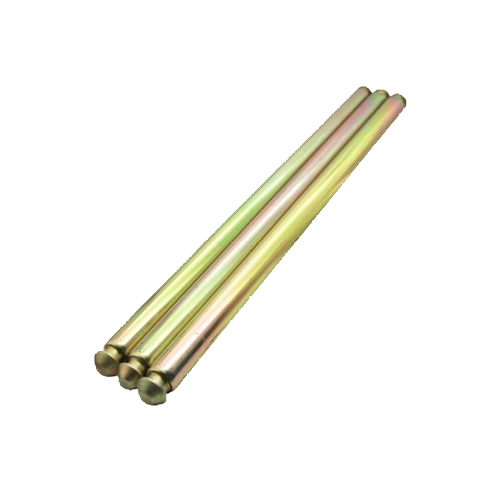
*Image for illustrative purposes only
*Due to the many variations in monitors and browsers, color samples may appear different on different monitors
-----
Complete Guide to the Castor Wheel Axle
The reliability, load-bearing capacity, and smooth rolling performance of any mobile trolley, waste bin, or heavy industrial cart depend directly on the structural strength of its central mounting hardware. The wheel tire and hub may carry the weight, but the Castor Wheel Axle serves as the critical load-bearing bridge between the rotating wheel assembly and the mounting fork frame.
Without a precision-engineered, heavy-duty axle, wheels can wobble, bind against the fork legs, wear down unevenly, or fail under heavy static loads. Whether you are assembling new material handling equipment or replacing worn hardware during routine facility maintenance, selecting and properly installing the right axle is essential for ensuring smooth rotational mobility, operator ergonomics, and long-term equipment safety.
This comprehensive guide covers everything you need to know about the Castor Wheel Axle—including its mechanical function, material properties, industry-specific applications, installation procedures, and preventative maintenance protocols.
What Is a Castor Wheel Axle?
A castor wheel axle is a specialized cylindrical pin, bolt, or shaft designed to pass directly through the central bore of a wheel hub and lock into the surrounding fork or yoke housing. It creates a fixed, ultra-stable horizontal axis around which the wheel's internal bearings rotate.
Rather than acting merely as a fastener, a castor axle performs three vital mechanical functions:
-
Primary Load Transfer Point: It bears 100% of the downward vertical load and side-impact forces transferred from the cart frame down to the wheel hub.
-
Bearing Support & Alignment: It provides a smooth, perfectly aligned hardened surface for internal roller bearings, ball bearings, or plain bore sleeves to rotate against without friction.
-
Fork Housing Anchor: Combined with locknuts, washers, or retaining pins, it clamps the fork legs at a precise distance, preventing the fork housing from spreading apart or pinching tight against the spinning wheel.
Key Performance Features & Technical Advantages
Every aspect of a high-quality castor wheel axle is designed to withstand structural shear stress, minimize rotational friction, and ensure long-term mechanical reliability in demanding workplaces.
1. Precision Machined Profile for Low-Friction Rotation
A rough, out-of-round, or undersized axle creates slop inside the wheel hub, causing the wheel to tilt, squeak, and wear down prematurely.
-
Tight Tolerances: Precision manufacturing ensures the axle diameter matches standard industrial bearing bores (such as 12mm, 15mm, or 20mm outer diameters) with exact tolerances, preventing wheel chatter and uneven tread wear.
-
Smooth Surface Finish: A polished exterior surface reduces wear on internal bearing races, plain sleeve bushings, and grease seals, lowering the overall physical pushing force required by operators.
-
Structural Concentricity: Perfectly straight geometry ensures equal weight distribution across both sides of the mounting fork, eliminating wobble during high-speed or heavy-load transit.
2. High-Tensile Material Construction & Shear Resistance
Under heavy commercial loads or abrupt shock impacts (such as rolling off curbs or dropping onto dock levelers), low-grade bolts can bend or shear off at the threads.
-
High Shear Strength: Engineered from high-tensile carbon steel, stainless steel, or hardened alloy compounds designed specifically to resist bending under intense dynamic weight.
-
Corrosion & Moisture Resistance: Quality axles feature protective zinc plating, galvanization, or stainless steel construction, preventing rust, seizure, and chemical corrosion in washdown bays, commercial kitchens, and outdoor environments.
-
Thread Integrity: Rolled or precision-cut threads allow high torque application without stripping, ensuring the axle nut remains locked in place despite continuous floor vibration.
Operating Without Proper Axles vs. Heavy-Duty Castor Axles
Using improvised hardware, undersized general bolts, or worn-out pins instead of a dedicated castor axle causes immediate mechanical issues and safety hazards.
Sector-By-Sector Application Guide
The reliability of a castor wheel axle is critical across every industry that relies on mobile material handling equipment:
1. Warehouses, Freight & Logistics Facilities
-
Heavy Stock Trolleys: Supports high-capacity order-picking carts carrying bulk inventory across concrete warehouse floors.
-
Pallet-Style Box Carts: Binds heavy wheel hubs to structural steel forks, withstanding impact spikes from loading dock levelers and threshold gaps.
-
Automated & Towable Trailers: Holds up against higher transit speeds and continuous rolling vibration without thread backing or pin wear.
2. Waste Management & Municipal Operations
-
Industrial Waste Bins & Tilt Trucks: Provides heavy-duty, rust-resistant mounting for large 200mm rubber or metal-hub wheels on heavy outdoor refuse containers.
-
Outdoor Facility Carts: Handles exposure to rain, mud, road salt, and harsh hose washdowns without seizing or rusting inside the wheel hub.
3. Healthcare Facilities & Hospitals
-
Medical Supply & Utility Carts: Ensures whisper-quiet wheel rotation on linen hampers, medical waste carts, and mobile diagnostic equipment.
-
Sanitary Washdown Equipment: Stainless steel or zinc-plated axles withstand repeated chemical disinfection and steam cleaning in sterile hospital environments.
4. Hospitality, Hotels & Food Services
-
Housekeeping & Laundry Trolleys: Supports smooth, wobble-free rolling down carpeted guest room corridors without producing squeaks or metal chatter.
-
Commercial Kitchen Equipment: Resists hot grease, food splatters, and daily floor sanitizing chemicals on mobile prep tables and banquet carts.
5. Manufacturing & Industrial Assembly Lines
-
Mobile Tool Cabinets & Workbenches: Supports heavy static loads when tool stations remain parked, ensuring smooth mobility when relocated across factory floors.
-
Heavy Parts Racks: Handles heavy steel castings and automotive components moving between assembly stations.
Step-by-Step Installation & Assembly Guide
Proper installation of the castor wheel axle ensures optimal bearing pre-load, prevents fork binding, and guarantees safe operation. Follow these steps when assembling or replacing a wheel axle.
Step 1: Gather Tools and Components
Before starting, ensure you have:
-
The replacement Castor Wheel Axle (pin/bolt, locknut, and spacers/bushings if required)
-
Compatible wheel and fork assembly
-
Two matching spanners or a socket wrench set
-
Multi-purpose bearing grease or light machine oil
-
Safety glasses and work gloves
Step 2: Prepare the Fork and Wheel Assembly
-
Completely unload the equipment and tip it securely onto its side or back.
-
Clean the interior mounting holes of the castor fork legs with a rag or wire brush to remove rust, old grease, and grit.
-
Inspect the internal bore or bearing raceway of the wheel to ensure it is clean and undamaged.
Step 3: Lubricate the Axle Shaft
-
Apply a thin, even coat of multi-purpose grease along the smooth shank of the axle bolt.
-
Note: Do not pack excessive grease onto the threaded end, as this can prevent the locking nut from securing properly.
Step 4: Insert the Axle Through Fork and Wheel
-
Align the central bore of the wheel between the two fork legs.
-
Insert any required side spacers or top-hat bushings between the wheel hub and the inner walls of the fork.
-
Slide the lubricated axle shaft through the first fork leg hole, through the wheel hub/bearing assembly, and out through the second fork leg hole.
Step 5: Attach and Torque the Locknut
-
Thread the locking nut (ideally a nyloc locknut or nut with a spring washer) onto the exposed axle threads by hand.
-
Hold the head of the axle bolt stationary with one spanner while tightening the nut with your second wrench or socket.
-
Crucial Step: Tighten until the nut is snug against the outer fork leg, but do not overtighten. Over-torquing can crush the fork legs inward, binding the bearings and stopping the wheel from spinning freely.
Step 6: Verify Free Wheel Rotation
-
Spin the wheel by hand. It should turn smoothly without grinding, catching, or binding.
-
Check for excessive lateral play: push the wheel side-to-side. There should be no noticeable wobble between the fork legs and the wheel hub.
Preventative Maintenance & Care Protocol
A well-maintained axle extends the lifespan of both the wheel bearings and the outer castor fork frame.
Weekly Visual Checks
-
Check Fastener Security: Inspect axle nuts to verify they have not backed off due to floor vibration.
-
Inspect for Tangled Debris: Remove wrapped string, hair, plastic strapping, or wire caught between the axle and the wheel hub immediately. Tangled material creates friction that can score the axle shaft and burn out bearings.
Monthly Maintenance Protocols
-
Re-Lubricate the Shaft: Apply fresh grease via a grease nipple (if equipped) or lightly oil the axle-bearing contact area to keep rotation smooth and prevent rust.
-
Check Alignment & Straightness: Inspect axles on heavily loaded carts for signs of bending or bowing. Replace bent axles immediately before they cause premature bearing destruction or structural fork damage.
Cleaning Protocols
-
Wash Down Dirt & Mud: Hose off accumulated grime, sand, or chemical residues.
-
Re-apply Protection: After high-pressure water or solvent cleaning, re-apply a light lubricant to the exposed metal threads and axle shaft to restore corrosion protection.
Troubleshooting Common Issues
Use this guide to quickly diagnose and resolve common axle and wheel mounting issues.
Issue 1: The Wheel Is Stiff and Will Not Spin Freely
-
Likely Cause: The axle nut is over-torqued, compressing the fork legs against the wheel hub and crushing the inner bearing races.
-
Solution: Back off the axle nut by a quarter to half turn until the wheel spins freely without lateral wobble.
-
-
Likely Cause: String, thread, or hair is wrapped tightly around the axle shaft inside the hub.
-
Solution: Unbolt the axle, remove the wheel, clear away wrapped debris with a utility knife, clean, re-grease, and reinstall.
-
Issue 2: The Wheel Wobbles or Clatters During Transit
-
Likely Cause: The axle diameter is too small for the wheel bore/bearing ID, or the axle shaft is worn down from long-term use.
-
Solution: Replace the undersized or worn axle with a precision-fit axle matching the exact bearing bore dimensions.
-
-
Likely Cause: The axle nut has backed off, allowing the fork legs to spread apart.
-
Solution: Tighten the axle nut to remove side-play, or replace worn standard nuts with a new nylon-insert locknut.
-
Issue 3: The Axle Is Bent or Hard to Remove
-
Likely Cause: The equipment was subjected to severe overload or high-impact shock drops (e.g., dropping off loading docks or curbs).
-
Solution: Drive out the bent axle pin using a punch and mallet, inspect the fork for structural cracking, and install a new high-tensile steel replacement axle.
-
Frequently Asked Questions (FAQs)
Q1: What is the main function of a castor wheel axle?
The axle serves as the central structural pin that connects the rotating wheel hub to the mounting fork frame. It provides a smooth, fixed axis for internal bearings to rotate around while bearing 100% of the equipment's load weight.
Q2: Can I use a standard hardware store bolt as a castor axle?
It is not recommended for heavy commercial or industrial use. Standard bolts often feature full threading along their shaft (which acts like a saw against internal bearings) and lower shear strength. Dedicated castor axles feature a smooth, hardened unthreaded shank designed specifically for bearing contact and high load-bearing capacity.
Q3: How do I know what size axle I need?
Measure three dimensions:
-
Outer Diameter (OD): Must match the inner diameter (ID) of your wheel's bearings or central bore (e.g., 12mm, 15mm, 20mm).
-
Shank Length: The smooth unthreaded portion must span the entire width of your wheel hub plus any required spacers.
-
Overall Length: Must be long enough to pass through both fork legs and allow full thread engagement for the locknut.
Q4: How tight should I torque the castor axle nut?
Tighten the nut until it rests firmly against the outer wall of the castor fork and all side-play is eliminated, but do not over-torque. The wheel should still spin completely freely by hand without binding or dragging against the inner fork legs.
Q5: What type of nut should be used on a castor wheel axle?
Nylon-insert locknuts (nyloc nuts) or nuts paired with split lock washers are best. These resist backing off or loosening caused by continuous vibrations from rolling over rough concrete, floor seams, and expansion joints.
Q6: Why is my axle rusting and seizing up?
Standard raw steel axles rust quickly when exposed to washdown water, rain, or floor-cleaning chemicals. Ensure you use zinc-plated, galvanized, or stainless steel axles in wet, outdoor, or clean-critical environments.
Q7: What are axle spacers or top-hat bushings used for?
Spacers fit onto the axle shaft between the wheel hub and the inner fork walls. They keep the wheel centered, protect bearing dust seals, and prevent the fork legs from rubbing directly against the spinning wheel body.
Q8: Should I grease the axle shaft during installation?
Yes. Applying a thin coat of multi-purpose grease to the smooth shank of the axle reduces friction during initial assembly, protects against corrosion, and prevents internal bearing races from seizing to the axle shaft over time.
Q9: What causes a castor axle to bend?
Axles usually bend due to extreme static weight overloading, dropping heavy loads onto carts abruptly, or high-impact collisions with curbs, loading dock levelers, or forklift tines.
Q10: How do I remove tangled hair or plastic strapping from around the axle?
Unbolt the axle nut, pull or tap out the axle pin, remove the wheel from the fork housing, and slice through tangled material using a utility knife or pliers before re-greasing and re-assembling the axle unit.