


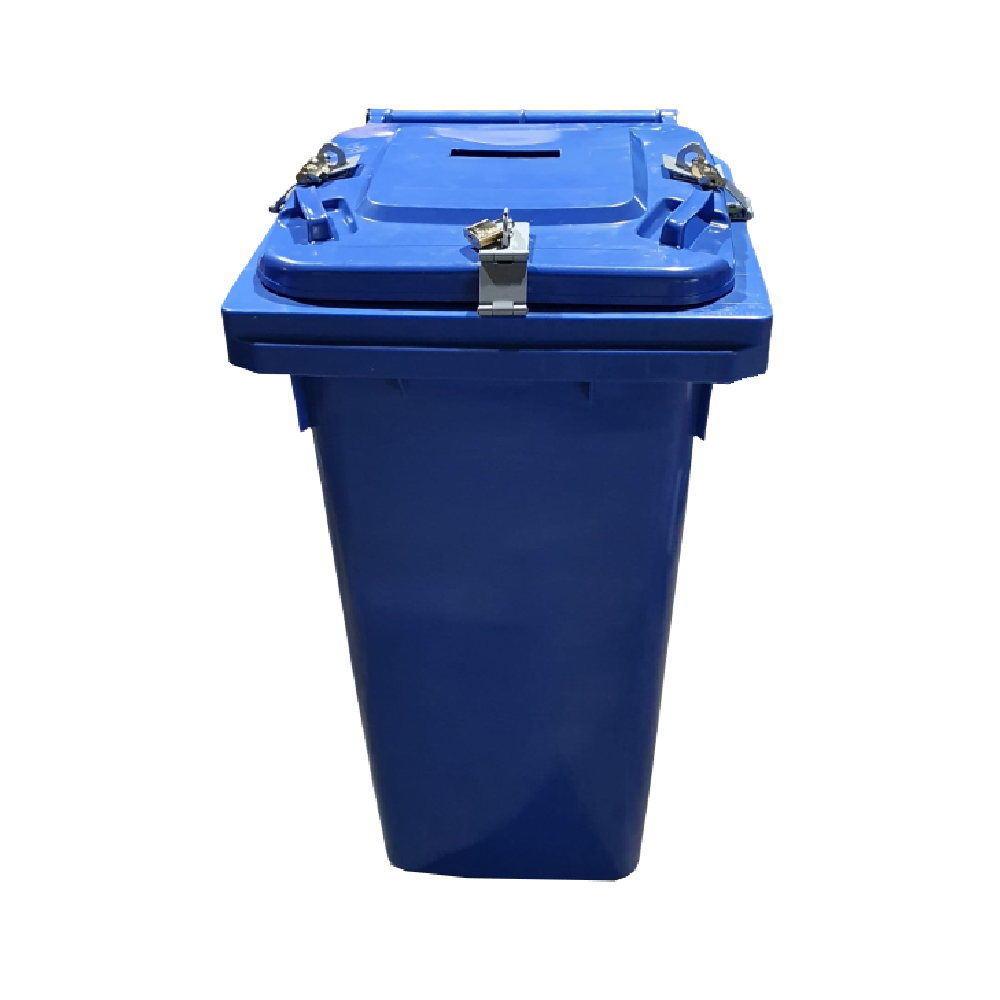
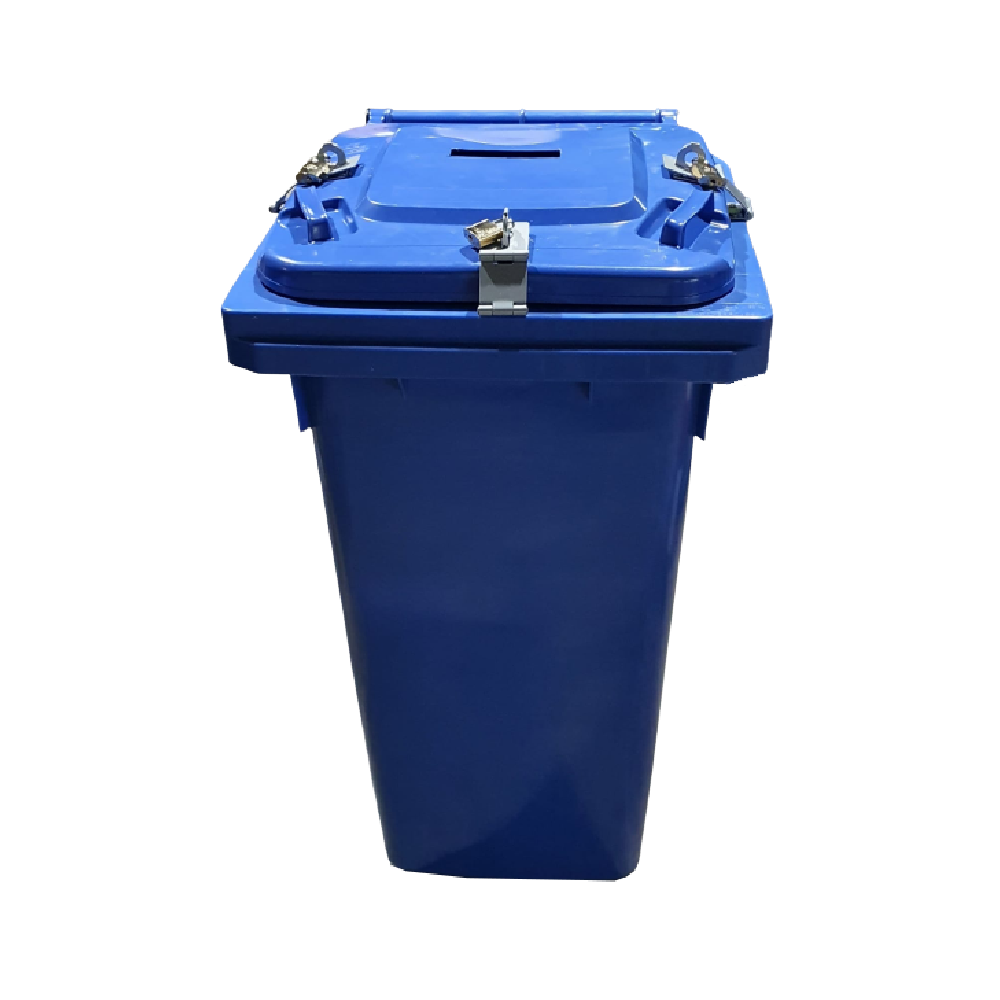

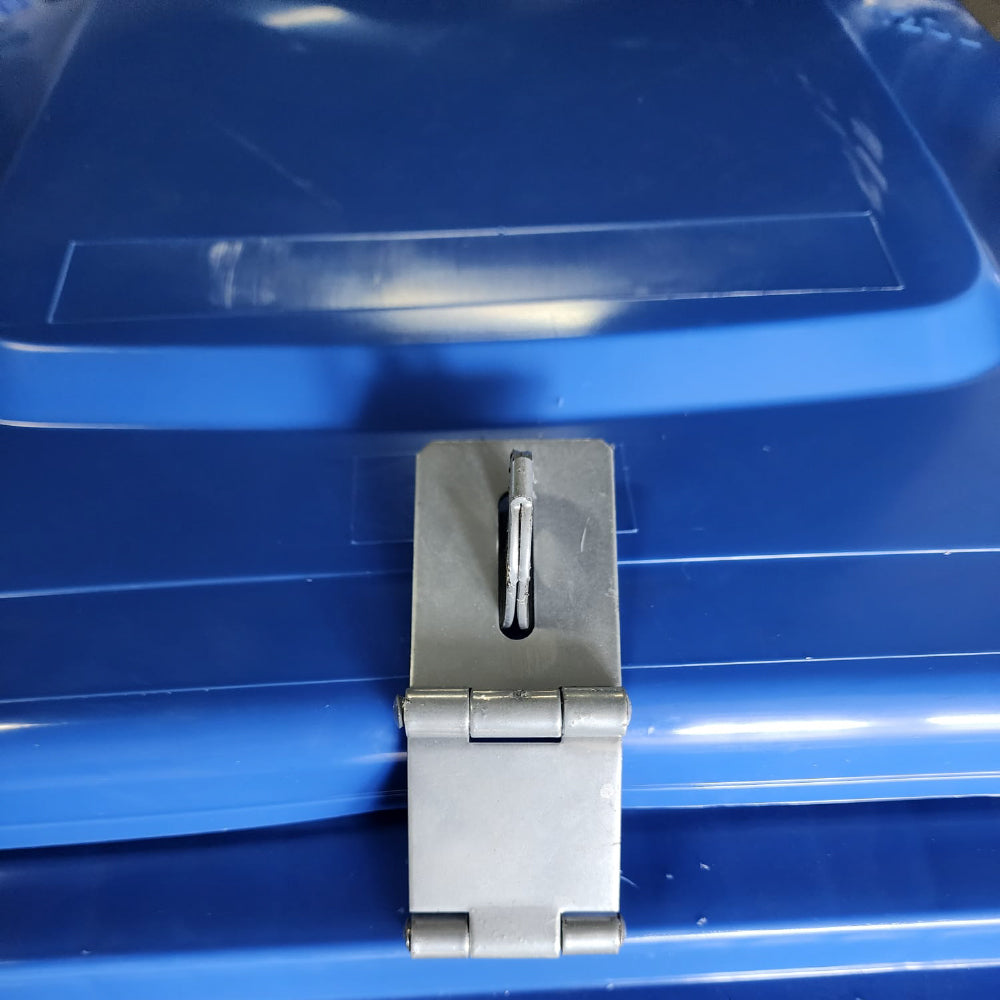
*Lock is not included
*Image for illustrative purposes only
*Due to the many variations in monitors and browsers, color samples may appear different on different monitors
-----
Complete Guide to Mobile Garbage Bin (MGB) Lock Assemblies
Managing waste in commercial, industrial, municipal, and residential spaces involves more than just collecting trash—it requires controlling access and maintaining site security. Unlocked wheelie bins (Mobile Garbage Bins or MGBs) are frequently targeted for unauthorized dumping (fly-tipping), identity theft through discarded documents, pest scavenging, and arson.
An MGB Lock Assembly converts standard mobile garbage bins into secure, restricted-access containers. Installing a specialized locking system ensures that only authorized personnel or keyholders can open the lid, protecting private data, preventing costly illegal dumping penalties, and keeping waste management operations safe and organized.
This comprehensive guide covers everything you need to know about MGB Lock Assemblies—including their mechanical design, security benefits, industry applications, installation steps, and preventative maintenance protocols.
What Is an MGB Lock Assembly?
An MGB Lock Assembly is a heavy-duty locking mechanism designed specifically to secure the lid of a Mobile Garbage Bin to its main body or handle structure.
Rather than acting as a simple external padlock latch, a dedicated bin lock assembly provides specialized structural security:
-
Restricted Access Control: Prevents unauthorized individuals from lifting the lid to dump non-compliant waste, hazardous materials, or bulky household items into commercial bins.
-
Document & Data Protection: Secures confidential paperwork, medical records, and sensitive personal files awaiting secure shredding or disposal, supporting privacy compliance.
-
Pest & Animal Defense: Keeps urban wildlife, rodents, stray animals, and birds from prying open bin lids and scattering refuse across property grounds.
-
Wind & Storm Protection: Holds lids firmly closed during severe storms or high winds, preventing bins from blowing open and littering surrounding areas.
Key Performance Features & Technical Advantages
Quality MGB lock assemblies are built to handle rough outdoor weather, physical tampering attempts, and heavy daily usage in busy facilities.
1. Gravity-Release & Triangular Key Mechanisms
Bin locks utilize specialized opening mechanisms tailored to automated municipal waste collection systems:
-
Gravity Lock Systems (Automated Release): These intelligent locks remain securely locked when the bin is upright. However, when an automated waste collection truck lifts and flips the bin upside down over its hopper, the internal gravity latch unlocks automatically under gravity, dropping the waste out without requiring the driver to manually unlock the bin. Once lowered back to the curb, the bin automatically locks itself again.
-
Triangular / Keyed Lock Systems: Standard triangular key operated locks allow facility staff and sanitation teams to open bins quickly using universal or master keys while keeping unauthorized passersby out.
2. High-Strength Weatherproof Materials
Using cheap general metal latches on outdoor plastic bins leads to rapid rust, binding, and structural failure.
-
Impact-Resistant Polymers & Stainless Steel: Fabricated from high-grade polyoxymethylene (POM), heavy-duty ABS, or stainless steel components that resist physical impacts, tampering, and force.
-
Corrosion & Weather Resistance: Internal springs and tumblers are shielded against rain, snow, road salt, and harsh washdown chemicals, preventing lock seizure in cold or wet environments.
-
UV Stabilization: Synthetic housings are treated with UV inhibitors to prevent the plastic from turning brittle or cracking under direct sunlight.
Unlocked Standard Bins vs. MGBs Fitted with Lock Assemblies
Operating unlocked waste containers introduces significant financial, environmental, and security risks to facilities.
Sector-By-Sector Application Guide
Secure MGB lock assemblies are essential across a wide variety of commercial, industrial, and public sectors:
1. Commercial Offices, Banks & Professional Services
-
Confidential Document Disposal: Secures 120L and 240L bins designated for paper shredding, protecting customer financial records, medical files, and proprietary business documents.
2. Retail, Shopping Centres & Restaurants
-
Preventing Unauthorized Fly-Tipping: Keeps nearby residents or neighboring businesses from dumping household trash or large shipping boxes into private commercial dumpsters.
-
Food Waste Security: Prevents scavengers and animals from accessing organic waste bins behind restaurants, maintaining strict site hygiene.
3. Healthcare Facilities & Hospitals
-
Clinical & Confidential Waste: Secures medical supply packaging and non-hazardous clinical waste, ensuring unauthorized personnel or visitors cannot tamper with healthcare bins.
4. Residential Complexes & Gated Communities
-
Shared Waste Bay Management: Ensures residents only use designated recycling and general waste bins, controlling municipal waste sorting compliance and reducing overfill fines.
5. Schools, Universities & Public Parks
-
Arson & Vandalism Prevention: Prevents trespassers from tossing lit matches, fireworks, or hazardous materials into plastic bins stored near building walls.
Step-by-Step Installation Guide
Installing a dedicated lock assembly onto a Mobile Garbage Bin requires basic hand tools and takes only a few minutes. Follow these general steps for standard triangular/gravity lock installations.
Step 1: Gather Tools and Components
Before starting, ensure you have:
-
The MGB Lock Assembly kit (including latch, receiver, key, and mounting hardware)
-
A power drill with appropriate drill bits
-
Screwdriver set or socket set
-
Measuring tape and marker pen
-
Safety glasses and work gloves
Step 2: Position and Mark Mounting Holes
-
Place the bin on a flat, stable surface with the lid closed completely flush against the front rim.
-
Position the main lock housing against the front lip or side rim of the bin body, aligning the upper latch with the lid margin.
-
Mark the mounting hole positions onto the bin body and lid using a marker pen.
Step 3: Drill Mounting Holes
-
Using a power drill fitted with a drill bit matching your kit's bolt dimensions, carefully drill through the marked points on the bin body and lid rim.
-
Clear away plastic burrs and shavings from around the freshly drilled holes.
Step 4: Mount the Lock Housing and Receiver
-
Insert the mounting bolts through the lock housing and through the drilled holes in the bin body.
-
Fasten flat washers and locknuts (nyloc nuts) onto the bolt ends inside the bin body.
-
Attach the receiving latch mechanism onto the bin lid following the same process.
Step 5: Torque Fasteners and Test Operation
-
Tighten all mounting bolts firmly using a wrench and screwdriver. Do not over-torque to the point of distorting the plastic bin wall.
-
Insert the key into the lock assembly and test the locking and unlocking mechanism several times with the lid down.
-
If installing a gravity lock, tilt the bin upside down manually to verify that the internal gravity latch disengages freely when inverted.
Preventative Maintenance & Care Protocol
Routine maintenance keeps lock assemblies operating smoothly and prevents key binding or lock seizure over time.
Monthly Routine Checks
-
Inspect Fastener Tightness: Check mounting nuts inside the bin to ensure they have not loosened from daily opening shocks or curbside handling.
-
Test Key Operation: Insert and turn the key to ensure the internal tumblers move smoothly without catching or binding.
Cleaning & Lubrication Protocols
-
Flush Out Dirt: Rinse dust, sand, or dried mud out of the keyway using compressed air or a water spray during routine bin washdowns.
-
Apply Dry Graphite Lubricant: Spray dry graphite powder or a specialized lock lubricant into the key slot periodically. Avoid heavy wet greases that attract dirt, dust, and sand particles inside outdoor locks.
Troubleshooting Common Issues
Use this guide to quickly diagnose and resolve common MGB lock assembly issues.
Issue 1: Key Is Stiff or Will Not Turn in the Lock
-
Likely Cause: Dirt, sand, or ice has entered the keyway, blocking the internal pins.
-
Solution: Flush out the keyway with compressed air or lock de-icer spray, then apply dry graphite lubricant. Never force the key, as it may snap.
-
Issue 2: Gravity Lock Does Not Release When Inverted by Collection Truck
-
Likely Cause: Dried waste, mud, or debris is jammed inside the gravity-release pendulum channel.
-
Solution: Clean the interior lock channel thoroughly with a water hose or brush to free up the internal pendulum mechanism.
-
Issue 3: Lid Does Not Close Flush After Lock Installation
-
Likely Cause: The lock housing and catch plate were misaligned during initial drilling.
-
Solution: Loosen the mounting bolts slightly, adjust the catch alignment so the latch engages smoothly when the lid rests flat, and re-tighten.
-
Frequently Asked Questions (FAQs)
Q1: Will a locked bin still empty automatically into garbage trucks?
Yes, if you install a Gravity Lock Assembly. Gravity locks remain secured when the bin is upright on the street, but disengage automatically when the hydraulic truck lift flips the bin upside down over the collection hopper.
Q2: What is the benefit of a triangular key lock?
Triangular key locks allow facility managers, cleaning crews, and sanitation drivers to use a simple universal key to open multiple bins across a facility without managing dozens of unique brass keys.
Q3: Can an MGB lock assembly be installed on any bin size?
Most lock assemblies are designed to fit standard 2-wheel Mobile Garbage Bins (such as 120L, 240L, and 360L sizes) as well as larger 4-wheel commercial bins (660L and 1100L). Always check bin lip compatibility before purchasing.
Q4: How do bin locks stop unauthorized fly-tipping?
By keeping the lid locked shut, unauthorized individuals cannot open the bin to dump bulk garbage, commercial waste, or hazardous materials into your private container, saving you money on extra waste disposal fees.
Q5: Can I use an MGB lock for secure document shredding?
Yes. Fitting an MGB lock assembly (often paired with a paper-slot lid) creates an economical, high-capacity secure bin for confidential paper disposal that meets corporate privacy compliance standards.
Q6: What tools are required to install an MGB lock assembly?
Basic installation requires a power drill, drill bits matching the mounting bolts, a screwdriver set, a socket wrench, a tape measure, and a marker pen.
Q7: Are MGB locks weather-resistant?
Yes. Commercial MGB lock assemblies use rust-proof polymer housings, stainless steel springs, and brass/alloy tumblers designed specifically to withstand outdoor exposure, rain, snow, and UV radiation.