

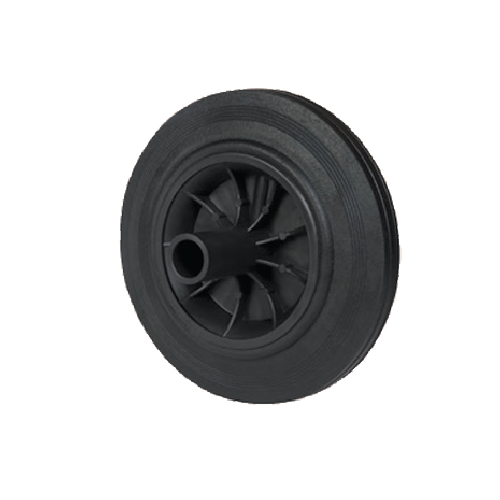
*Image for illustrative purposes only
*Due to the many variations in monitors and browsers, color samples may appear different on different monitors
-----
Complete Guide to the 200mm Rubber Wheel
Transporting heavy machinery, commercial utility carts, or industrial waste containers across busy workplaces demands wheels engineered for floor protection, shock absorption, and silent rolling performance. Rigid or hard plastic wheels often produce excessive noise, transfer severe vibration to loads, and leave permanent tracking scuffs on polished commercial floors.
The 200mm Rubber Wheel is designed specifically to solve these problems. Combining a heavy-duty rubber construction with a large 200mm diameter profile, this wheel delivers high traction, quiet rolling, superior shock absorption, and dependable surface protection across commercial, industrial, and institutional environments.
This comprehensive guide covers everything you need to know about the 200mm Rubber Wheel—including its physical properties, material advantages, sector-specific applications, installation procedures, and maintenance protocols.
What Is a 200mm Rubber Wheel?
A replacement or primary castor wheel provides the essential contact point between movable equipment—such as trolleys, carts, bins, and mobile machinery—and the ground surface.
Unlike hard nylon, cast iron, or unyielding phenolic wheels, a rubber castor wheel utilizes an elastomeric tread compound. This elastic rubber tire deforms slightly under load to absorb micro-shocks, grip smooth surfaces, and cushion equipment during transit.
This model combines three core structural attributes:
-
A Large 200mm Outer Wheel Diameter: Measuring 200 millimetres (approximately 8 inches) across, this wheel acts as a mechanical lever, making it substantially easier to roll heavy loads over floor cracks, doorway thresholds, and rough ground.
-
Durable Rubber Construction: Engineered from high-density vulcanized rubber or solid synthetic elastomer compounds that resist chunking, tearing, and flat-spotting under load.
-
Vibration-Dampening & Floor-Protective Profile: The inherent elasticity of rubber dampens impact energy, protecting delicate cargo from vibration while keeping high-gloss indoor floors safe from scoring and scuffing.
Key Performance Features & Technical Advantages
Every aspect of the 200mm Rubber Wheel is built to maximize operator ergonomics, reduce workplace operational noise, and protect facility flooring from damage.
1. Large 200mm Diameter for Effortless Rolling
Small wheels (such as 100mm or 125mm castors) frequently catch on minor floor cracks or doorway tracks, abruptly stopping heavy equipment and causing operator strain.
-
Superior Obstacle Clearance: The 200mm diameter bridges floor expansion joints, elevator threshold gaps, cable runners, and outdoor debris effortlessly.
-
Reduced Physical Strain: Physics dictates that larger wheels require significantly less initial breakaway force to start rolling and less energy to maintain momentum, lowering operator fatigue and injury risks.
-
Enhanced Roll Efficiency: Larger circumferences complete fewer revolutions per distance traveled, reducing internal bearing heat and wear over long shifts.
2. High-Traction Rubber Material Advantages
While hard metal or plastic wheels excel under static ultra-heavy loads, rubber construction offers distinct functional benefits for moving equipment:
-
High Surface Grip & Traction: The rubber compound grips smooth concrete, wet tiles, epoxy, and steel ramps, preventing dangerous cart sliding during braking or sharp turns.
-
Superior Shock Absorption: Rubber acts as a natural dampener, absorbing physical impacts from rough outdoor asphalt, threshold bumps, and floor seams before they transfer to sensitive equipment or fragile cargo.
-
Floor Protection: Elastomeric rubber distributes weight evenly without gouging, scratching, or tracking marks onto expensive epoxy, hardwood, tile, or vinyl flooring.
-
Ultra-Quiet Rolling: Rubber treads absorb operational noise, creating a significantly quieter environment compared to the loud clattering of hard plastic or metal wheels.
Hard Wheels vs. 200mm Rubber Wheels
Comparing hard wheel materials (such as nylon or cast iron) with the 200mm Rubber Wheel highlights the clear advantages in noise control, traction, and floor safety.
Sector-By-Sector Application Guide
The quiet operation, shock absorption, and high grip of the 200mm Rubber Wheel make it a practical choice across demanding industries:
1. Healthcare Facilities & Hospitals
-
Medical Supply & Utility Carts: Large rubber wheels roll silently down hospital hallways without disturbing patients or damaging sanitary flooring.
-
Mobile Linen & Laundry Trolleys: Absorbs vibration when transporting heavy linen stacks across floor transitions and elevator gaps.
-
Medical Waste Containers: Provides high-grip, stable transport for hazardous waste bins across tile and epoxy surfaces.
2. Hospitality, Hotels & Food Services
-
Housekeeping Carts: Moves linen and amenity carts smoothly and quietly down carpeted guest room corridors without scuffing walls or trim.
-
Banquet & Catering Carts: Transports heavy food warmers, stackable chairs, and serving tables into event halls quickly and quietly.
-
Commercial Kitchen Equipment: Rubber treads handle wet, tiled kitchen floors safely without slipping.
3. Warehouses & Logistics Facilities
-
Stock-Picking Trolleys: Allows order pickers to navigate warehouse aisles smoothly and quietly while protecting concrete coatings.
-
Order Package Handling: The large 200mm wheel bridges expansion joints and metal dock leveler plates with minimal vibration.
-
Mobile Tool Stations: Relocates heavy tool cabinets directly to assembly lines without damaging shop floor coatings.
4. Waste Management & Janitorial Operations
-
Wheelie Bins & Tilt Trucks: Upgrades trash containers and recycling carts to roll effortlessly over outdoor asphalt, gravel paths, and drain grates.
-
Janitorial & Cleaning Trolleys: Allows cleaning crews to transport heavy water buckets, mops, and chemical supplies quietly through commercial buildings.
5. Schools, Universities & Public Arenas
-
Sports Equipment Cages: Easily rolls heavy ball cages, mats, and athletic gear out of gym storage rooms and across delicate hardwood court floors without leaving marks.
-
Stage & AV Gear Cases: Transports sound systems, stage lighting rigs, and musical instruments safely across stages and outdoor event grounds without shaking delicate electronics.
Step-by-Step Installation Guide
Proper installation ensures your 200mm Rubber Wheels operate safely and deliver maximum service life. Follow these steps to mount or replace a castor wheel properly.
Step 1: Gather Tools and Safety Gear
Before starting, ensure you have:
-
200mm Rubber Wheels or complete castor assemblies
-
High-tensile steel bolts, flat washers, and locknuts (nyloc nuts are recommended to prevent loosening from vibration)
-
Spanners or a socket wrench set
-
Safety glasses and work gloves
Step 2: Prepare the Equipment Base
-
Completely empty the cart, trolley, or bin so it is light and safe to tilt.
-
Carefully flip the unit upside down or lay it on its side to access the axle or mounting plate area.
-
If replacing an old wheel, unbolt the axle pin or mounting plate and clean the area with a rag to remove dirt, grease, and rust.
Step 3: Align the Wheel or Mounting Plate
-
If replacing a wheel on an existing fork: Slide the new 200mm Rubber Wheel into the fork housing, aligning the central wheel bore with the axle holes.
-
If mounting a complete castor assembly: Place the top plate over the pre-drilled mounting holes on your equipment frame, ensuring it rests completely flat.
Step 4: Insert Fasteners Hand-Tight
-
Insert the axle bolt through the fork and wheel bore (or insert mounting bolts through the top plate).
-
Attach flat washers and locknuts to the ends of all bolts.
-
Hand-tighten all nuts first to verify correct alignment before fully torquing down.
Step 5: Torque Fasteners Securely
-
Using a socket wrench and spanner, tighten each nut firmly.
-
Do not overtighten axle bolts to the point of crushing the inner bearing race or wheel hub; the wheel should spin freely without side-to-side play.
Step 6: Test Movement
-
Turn the equipment right-side up onto its new rubber wheels.
-
Push the equipment across the floor to test rolling resistance, confirm quiet operation, and verify free rotation.
Preventative Maintenance & Care Protocol
Although built for long-term commercial use, routine preventative maintenance maximizes service life and keeps rolling resistance low.
Weekly Visual Inspection
-
Inspect Tread Surface: Check the rubber tread for embedded foreign objects like glass fragments, gravel, or metal shavings, and pick them out.
-
Clear Tangled Debris: Threads, string, hair, and plastic strapping frequently wrap around wheel axles in commercial spaces. Cut away these tangles using a utility knife or pliers immediately to prevent bearing binding.
Monthly Maintenance Checks
-
Inspect Rubber Integrity: Check the rubber tire for signs of uneven wear, chemical cracking, or flat spots caused by long-term static overloading.
-
Check Axle & Fastener Tightness: Vibrations from rolling over floor seams can loosen hardware over time. Check axle bolts and mounting nuts with a wrench to ensure they remain tight.
-
Verify Free Rotation: Spin the wheel by hand to ensure internal bearings rotate smoothly without grinding or sticking.
Cleaning Protocol
-
Wash Down Dirt: Wash off accumulated dirt, mud, or food spills using warm water and mild detergents.
-
Avoid Harsh Chemicals: Avoid soaking rubber wheels in concentrated petroleum distillates, strong acids, or aromatic solvents that can soften or degrade elastomeric rubber compounds over time.
Troubleshooting Common Issues
Use this guide to quickly diagnose and resolve common rubber castor wheel performance issues.
Issue 1: The Wheel Is Hard to Push or Dragging
-
Likely Cause: String, hair, or plastic strapping is wrapped tightly around the axle bolt.
-
Solution: Cut away tangled debris using a utility knife or pliers.
-
-
Likely Cause: Axle nut is overtightened, compressing the wheel hub against the fork legs.
-
Solution: Back off the axle nut slightly until the wheel spins freely without lateral wobble.
-
Issue 2: The Wheel Has Developed a Flat Spot
-
Likely Cause: Equipment was left stationary under an extreme weight load for an extended period.
-
Solution: Roll the cart under normal load to allow the rubber compound to rebound; replace the wheel if the flat spot is permanent.
-
Issue 3: Wheel Makes Squeaking or Grinding Noises
-
Likely Cause: Internal wheel bearings are dry or contaminated with dirt and grit.
-
Solution: Clean the bearing area with compressed air or water, then apply a spray of light penetrating lubricant or lithium grease.
-
Frequently Asked Questions (FAQs)
Q1: What is the main benefit of a rubber wheel compared to a hard plastic or metal wheel?
Rubber wheels provide superior shock absorption, high traction on smooth surfaces, floor protection against scratches and scuffs, and exceptionally quiet rolling performance compared to hard plastic or metal wheels.
Q2: What is the advantage of a 200mm wheel diameter?
A 200mm wheel provides a large circumference that gives operators greater mechanical advantage when pushing heavy loads. It rolls easily over floor cracks, door tracks, expansion joints, and outdoor gravel that would stop smaller wheels in their tracks.
Q3: Will rubber wheels leave dark scuff marks on clean indoor floors?
No. Quality commercial rubber castor wheels utilize non-marking rubber compounds designed specifically to protect indoor flooring, making them safe for high-gloss tile, epoxy, vinyl, and polished concrete surfaces.
Q4: Are rubber wheels suitable for outdoor use?
Yes. The 200mm wheel diameter and durable rubber tread handle outdoor asphalt, concrete aprons, drain grates, and gravel paths easily, absorbing ground impacts effectively.
Q5: Can rubber wheels handle wet surfaces?
Yes. The elastomeric rubber tread provides excellent grip on wet tiles, polished epoxy, and metal ramps, reducing the risk of equipment skidding or sliding during transit.
Q6: What types of equipment use a 200mm rubber wheel?
It is widely used on hospital linen carts, housekeeping trolleys, warehouse stock pickers, industrial waste bins, tilt trucks, sports equipment cages, and utility carts across commercial and manufacturing sectors.
Q7: How do I remove tangled hair or string from the wheel axle?
Use a utility knife, small blade, or pliers to slice through tangled threads or plastic strapping wrapped around the axle, then pull the debris clear to restore free wheel rotation.
Q8: Can rubber wheels withstand chemical spills?
Standard rubber wheels resist water, soaps, mild cleaning agents, and diluted chemicals. For areas with heavy exposure to oils, concentrated acids, or harsh solvents, verify chemical compatibility or consider specialized synthetic rubber blends.
Q9: What hardware should I use to mount a rubber wheel castor?
Mount top plates or axle pins using high-tensile steel bolts, flat washers, and locking nuts (nyloc) suited to the hole dimensions on the mounting hardware.
Q10: Why are rubber wheels recommended for healthcare and hospitality settings?
Because they run almost silently, absorb floor vibrations, and will not scuff or scratch expensive interior flooring, making them ideal for noise-sensitive and clean-critical environments.